OFM
Order of Friars Minor
Province of St. Thomas the Apostle, India
Joy is Being Franciscan
Joy is Being Franciscan
| Diocese | KADAPPA |
|---|---|
| Year of Foundation | 1949 |
| Juridical Status | Guardianate |
| Specific Mission | Formation (Juniorate and Novitiate), Parish Ministry, Community College, Social work, Farm |
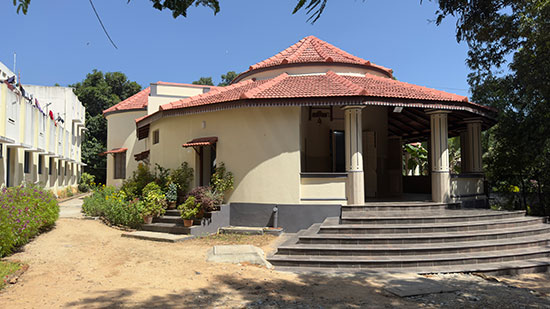
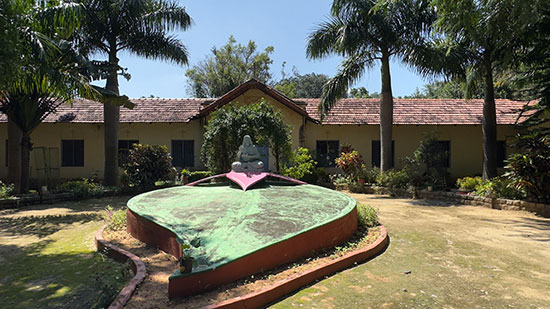
In the year 1949, Dr. Louis Mathias SDB, the Archbishop of Madras, offered the Friars 17 acres of land and an old bungalow in Palamaner. Previously, this property had been the country estate of the famous Ida Scudder, the foundress of the Protestant Medical College at Vellore. Fr. Dennis Boers, pioneer and founder of the Indian Province, visited Palamaner before accepting the offer. The official transfer took place on 25 August 1949, the feast of St. Louis, the French King and patron of the Archbishop. On 2 December 1949, the Friars took up residence in Palamaner. Out of gratitude to Archbishop Louis Mathias, the Friars named the property St. Louis Friary and accepted St. Louis the King as their patron saint.
Initially, the old bungalow served as the house for the Novitiate and Philosophy students. In August 1952, the philosophy students moved to Bangalore, where a new friary was nearing completion. As more students from southern India began joining, the Friars realized that one or two years of grounding in English were necessary before attending philosophy classes. This led to the establishment of the Juniorate Formation programme of two or more years. For its proper functioning, a separate building was soon deemed necessary.
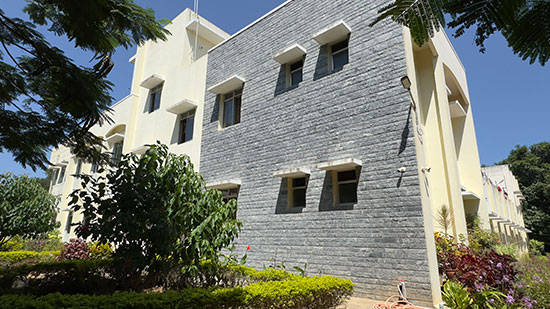
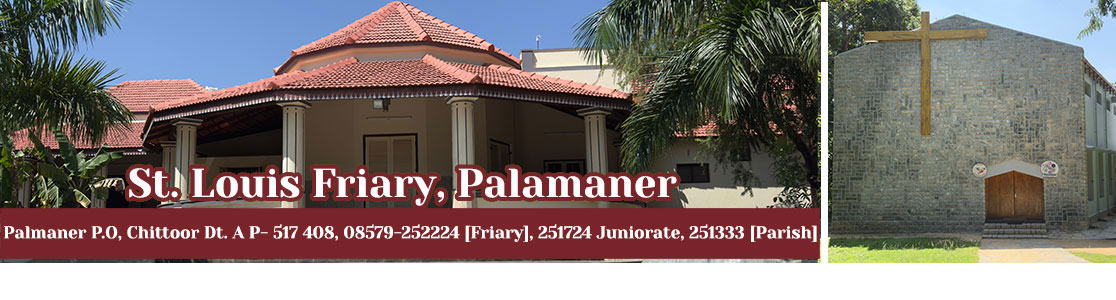
In 1956, a plan for a new building was presented to the Provincial in Holland and accepted with some alterations. Thus, the present quadrangle-shaped Novitiate building was constructed. Attention then turned to building a chapel. Around the time of the Second Vatican Council, incorporating the liturgical reforms and paying careful attention to detail, Fr. Christopher Coelho designed a gem of a modern chapel in 1966 — a structure that was both liturgically sound and artistically praiseworthy. These three buildings — the bungalow, the novitiate, and the chapel — became foundational for the initial and novitiate formation of the Friars. Palamaner came to be affectionately called the cradle of Friars’ formation in India.
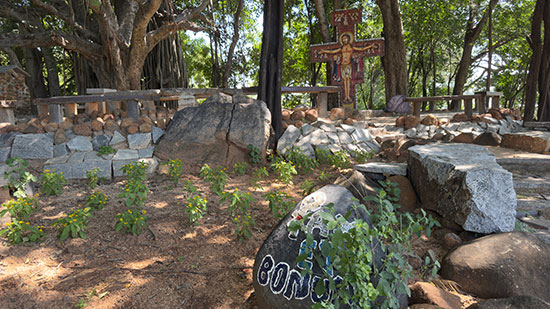
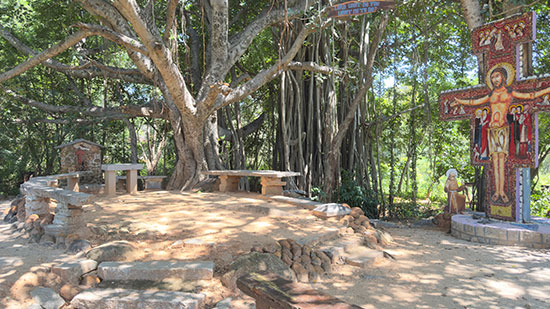
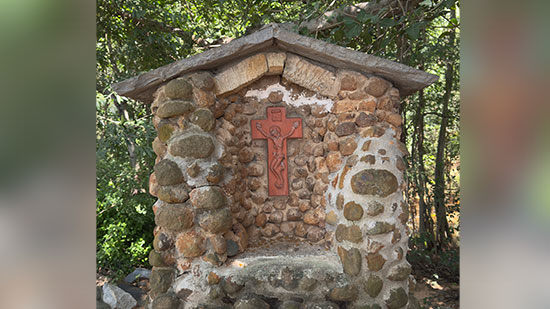
In 1970, when Friar Leo Remedios died in an accident in Chennai, his body was brought to Palamaner. Fr. Christopher and the community chose a serene place under the tamarind trees for a cemetery, which has since become the official final resting place of the Friars.
Over the years, Palamaner itself has undergone striking topographic and demographic transformations. The once quiet village with its thatched houses has grown into a bustling municipality. The daily queue of poor people waiting for porridge has disappeared; new mosques and colleges have risen, and the town’s tempo has quickened.
When Archbishop Louis Mathias handed over the land to the Friars, he required them to take charge of the Parish of Palamaner and the chaplaincy to the FMM Sisters. There is documentary evidence of a Catholic community here as early as 1845. The present parish compound was purchased in 1868, and the Parish of St. Louis was officially established on 28 December 1941. It was handed over to the Friars on 25 July 1949. Fr. Dennis Boers, Guardian of St. Louis Friary, became the first Parish Priest, assisted by Friar Paschal Lobo. Among his successors, Friar Paulinus Van Haldren, a Dutch friar who served nearly fourteen years, stands out as the longest-serving parish priest. He learned Telugu and worked tirelessly for the spiritual, human, and material upliftment of the people. The charming church he built has faithfully served the parishioners for decades.
Successive Friar Priests of the Parish, together with the dynamic Friar Marianus Reddy and Friar Fabian D’Souza, established several small chapels in the surrounding villages, many of which have since grown into independent parishes of the diocese.
On the social front, the charismatic Friar Fabian occupies a special place in the history of Palamaner. As Novice Master for about fifteen years, he and his novices collaborated with the doctors of Emmaus Hospital to eradicate leprosy in the region — a mission that met with remarkable success. Friar Marianus Reddy, along with his sister Dr. Arogyamma and her husband John, joined this effort by supporting the education of children from leprosy-affected families and other poor backgrounds. Over the years, their compassionate ministry has touched the lives of more than one lakh (100,000) children.
The Friars also faithfully served as chaplains to the FMM Sisters, who began their presence in Palamaner in 1942 on fifteen acres of land gifted by Mrs. Ida Chambers. With the fervent support of Archbishop Louis Mathias, the Sisters helped revive the waning Catholic faith in the area. Their dispensary and school became a source of hope and healing for the local population. Later, two other congregations — the Daughters of Divine Providence in the early 1980s and the JMJ Sisters in 2011 — joined in enriching the mission presence in Palamaner.
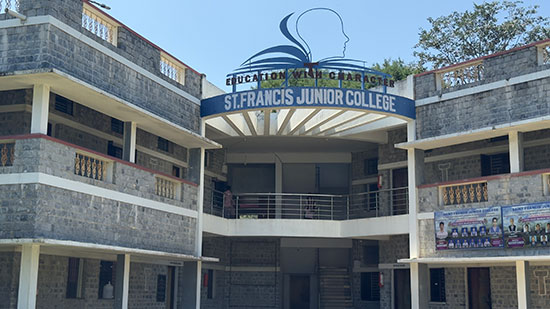
In the following decades, the Friars continued to adapt and renew their mission in response to changing needs. In 2012, through the sponsorship of Dr. Arogyamma and John, a Community College was started within the Friary compound, initially offering computer courses. Recognizing the educational needs of the youth, the Provincial Team soon transformed it into a Junior College within the same year.
As the parish community grew, plans were made for a larger church. Supported by the Province, construction of the new parish church began in November 2023 — a symbol of growth and renewal. Around the same time, the Friars also began building a strong granite-and-cement compound wall around the entire 17-acre property, marking a significant step toward preserving their heritage.
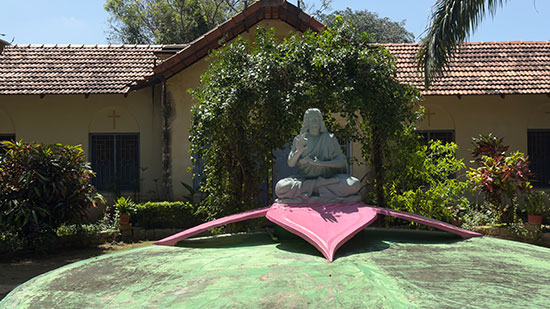
The Fathers’ Bungalow, an iconic landmark since 1949, underwent a major renovation in the latter half of 2023, restoring it to its original charm and strength. The beautiful chapel of 1966 was also thoroughly refurbished before Christmas of that year, reclaiming its place as a space of prayer and aesthetic grace. The Friary Guest House, too, received much-needed repairs and upgrading in 2024, ensuring a warm and comfortable welcome for visitors.
Thus, from its humble beginnings as a small estate gifted by a generous archbishop, the story of the Friars at Palamaner unfolds as a vibrant saga of faith, formation, fraternity, and service — a living testament to the enduring Franciscan spirit that continues to renew itself through every generation